Reader story · Healthy aging
"I Did Everything Right and My Numbers Kept Climbing." What Frank, 64, Learned About a Rare Olive
He cut the bread, took his pills and walked after dinner, and still dreaded every reading. What Frank learned about olive oil polyphenols, cinnamon and the 2-drop routine he added to his plan, with his doctor's OK.
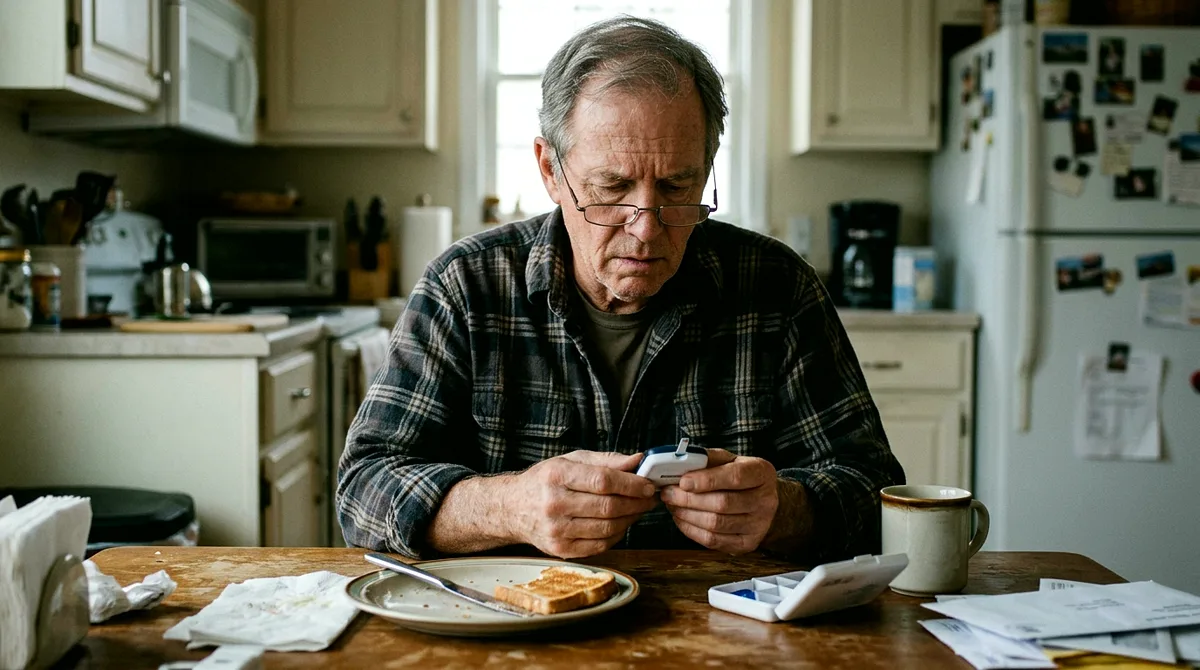
Frank is 64, a retired bus driver from Pennsylvania and the grandfather of four. Eight years ago his doctor told him his blood sugar was too high. "I did what they told me," he says. "Cut the bread, cut the soda, took the pills, walked after dinner. And the numbers kept creeping up anyway."
What bothered him most wasn't the number. It was the feeling. "You start doing math at every meal. You skip the cake at your granddaughter's birthday and everybody pretends not to notice. I didn't want to be 'the sick grandpa.'"
Why "doing everything right" can feel like it isn't working
Frank's story is common. Type 2 diabetes tends to progress over time, and many people need more support as the years go on, even when they follow their plan. That is not a personal failure. It is why doctors keep adjusting treatment.
It is also why so many people look for small, sensible additions to their routine: what they eat, how they move after meals, and a few foods and nutrients that researchers have studied for healthy blood sugar.
What Frank's daughter found in the research
Frank's daughter, a nurse, sat down with him and looked at the studies, including what they do not show.
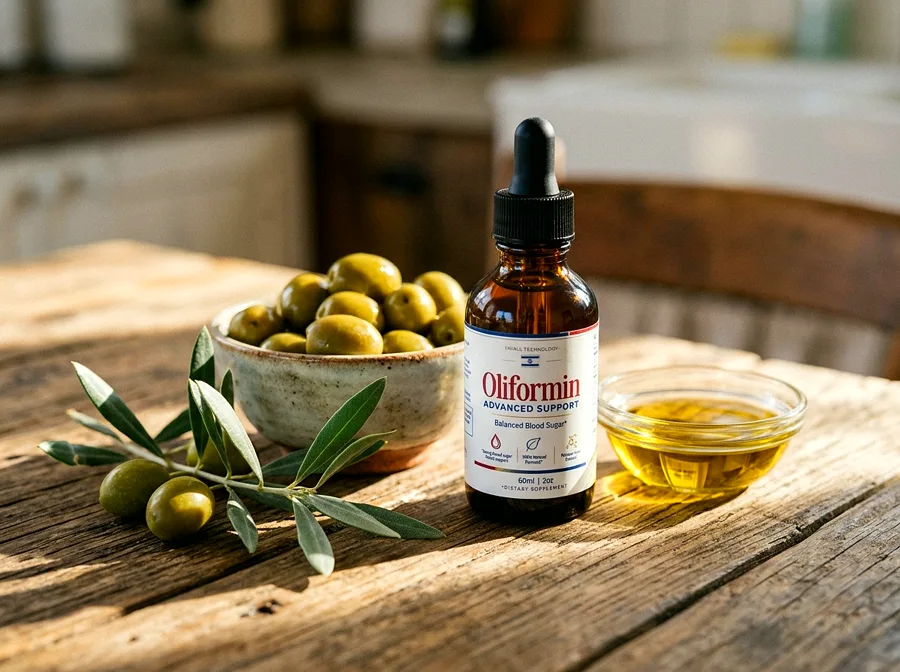
1. Olive oil polyphenols and oleocanthal
Extra-virgin olive oil is the backbone of the Mediterranean diet. A 2017 review in Nutrition & Diabetes found that people who ate more olive oil had a lower risk of type 2 diabetes, and that olive oil was linked to better blood sugar markers in people who already had it.
One of its polyphenols, oleocanthal, was described in Nature in 2005 for its natural anti-inflammatory activity. Some olive varieties, like the Souri olive grown in the eastern Mediterranean, are especially rich in polyphenols. Most of this research is on olive oil as a food, not on any one supplement.
2. Ceylon cinnamon
Cinnamon is one of the most studied spices for blood sugar. A 2013 meta-analysis in the Annals of Family Medicine found that cinnamon was linked to modestly lower fasting blood sugar in people with type 2 diabetes. The effect was small and the studies varied, so cinnamon supports a plan; it does not replace one. Ceylon cinnamon is the gentler variety, with far less coumarin than the common kind.
3. Honey and blackberries
The formula Frank chose also includes a small amount of wild honey and blackberry, a source of anthocyanins, the deep-colored plant compounds studied for how they support healthy cells. At two drops a day, the honey is a tiny amount, not a dessert.
Frank's 2-drop morning routine
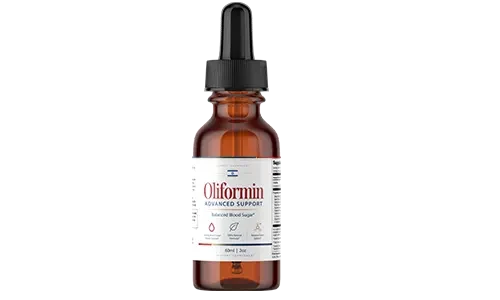
Frank didn't want another handful of pills. What he found was Oliformin, liquid drops built around Souri olive oleocanthal with Ceylon cinnamon, wild honey and blackberry.
"Two drops under the tongue before my coffee," he says. "That's it." He showed the label to his doctor first and kept every medication exactly as prescribed.
He is careful about what he says next. "It's not a cure, and I'm not going to tell you to throw anything away. What I can tell you is that I feel more in charge of my mornings. I eat breakfast without the dread. My doctor and I watch the numbers together."
Read this first
Oliformin is a dietary supplement. It is not a treatment for diabetes, it does not replace insulin, metformin or any medication, and you should never stop or change your medication on your own.
If you have diabetes or take medication that lowers blood sugar, talk to your doctor before you start any supplement, and keep checking your numbers as your doctor advises. If you are pregnant or nursing, ask your doctor first.
Results vary from person to person. That is why most people choose the 3-bottle package, and why every order comes with a 90-day money-back guarantee.

The drops Frank uses: Oliformin
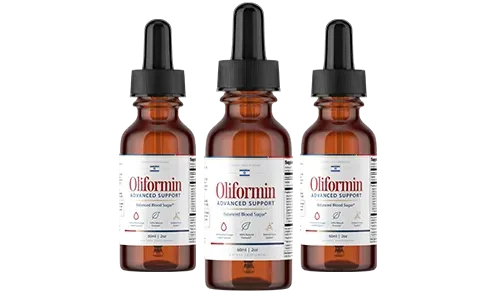
Oliformin is a liquid dietary supplement that supports healthy blood sugar levels as part of a healthy diet and lifestyle.*
- Souri olive oil extract (oleocanthal)
- Ceylon cinnamon
- Wild honey
- Blackberry (anthocyanins)
- 2 drops under the tongue each morning, 60 mL per bottle
See the Oliformin drops Frank uses →Official Oliformin page · 90-day money-back guarantee
Where to get Oliformin
Oliformin is sold through its official checkout, which is the one covered by the 90-day money-back guarantee. Most people choose 3 bottles: a 90-day supply at the lowest price per bottle.
3 bottles$99 total$33 per bottle · free US shipping
Choose 3 bottles
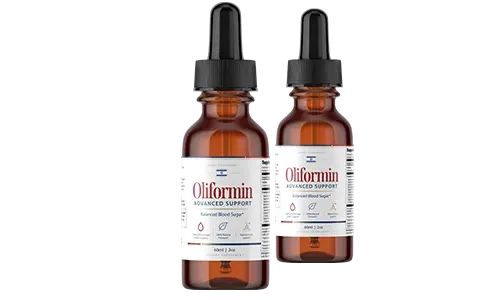 2 bottles$89 total$44.50 per bottle · free US shipping
Choose 2 bottles
 1 bottle$79 totalfree US shipping
Choose 1 bottle
Your order is a subscription: your package refills and is billed every 28 days at the same price until you cancel; cancel anytime by e-mail. Express shipping and a 365-day protection add-on may be pre-selected at checkout; both are optional, so remove them to pay only your package price.

90-day money-back guarantee
If Oliformin is not right for you, e-mail support@oliformin.com within 90 days of your purchase with your order number and ask for a refund.
Questions readers ask
How do I take it?
Two drops under the tongue each morning, as directed on the label.
Can it replace my diabetes medication?
No. Oliformin is a dietary supplement. It does not diagnose, treat, cure or prevent any disease and does not replace any medication. Never stop or change a prescription on your own; talk to your doctor before starting.
Does the honey raise my blood sugar?
At two drops a day the honey is a very small amount. If you are unsure, show the label to your doctor.
How soon will I notice something?
Nobody can honestly promise a date and results vary. The 90-day guarantee gives you time to decide.
- Schwingshackl L et al. Olive oil in the prevention and management of type 2 diabetes mellitus: a systematic review and meta-analysis. Nutrition & Diabetes, 2017.
- Beauchamp GK et al. Ibuprofen-like activity in extra-virgin olive oil. Nature, 2005.
- Allen RW et al. Cinnamon use in type 2 diabetes: an updated systematic review and meta-analysis. Annals of Family Medicine, 2013.